Introduction
Creating an online store involves specific legal obligations. Among them, legal notices are essential. They reassure your customers, enhance your credibility, and help you avoid penalties.
In this article, you will discover how to easily create complete legal notices, where to display them, and what other legal pages to add to be fully compliant.
Today, more and more entrepreneurs are launching their online stores without necessarily knowing all the legal obligations. However, the legal framework of e-commerce is strict and applies to all stores, whether they generate a lot of revenue or are still in the launch phase.
Legal notices are among the first elements that visitors can consult to verify the reliability of a site. A site without clear legal information can immediately raise suspicion, even driving away a potential customer.
Conversely, a transparent store, with complete and accessible legal notices, conveys a professional and serious image. It is often an underestimated lever for improving trust and conversion rates.
Taking the time to properly draft this information from the start will help you avoid costly mistakes and lay a solid foundation for your online business.
Why legal notices are essential
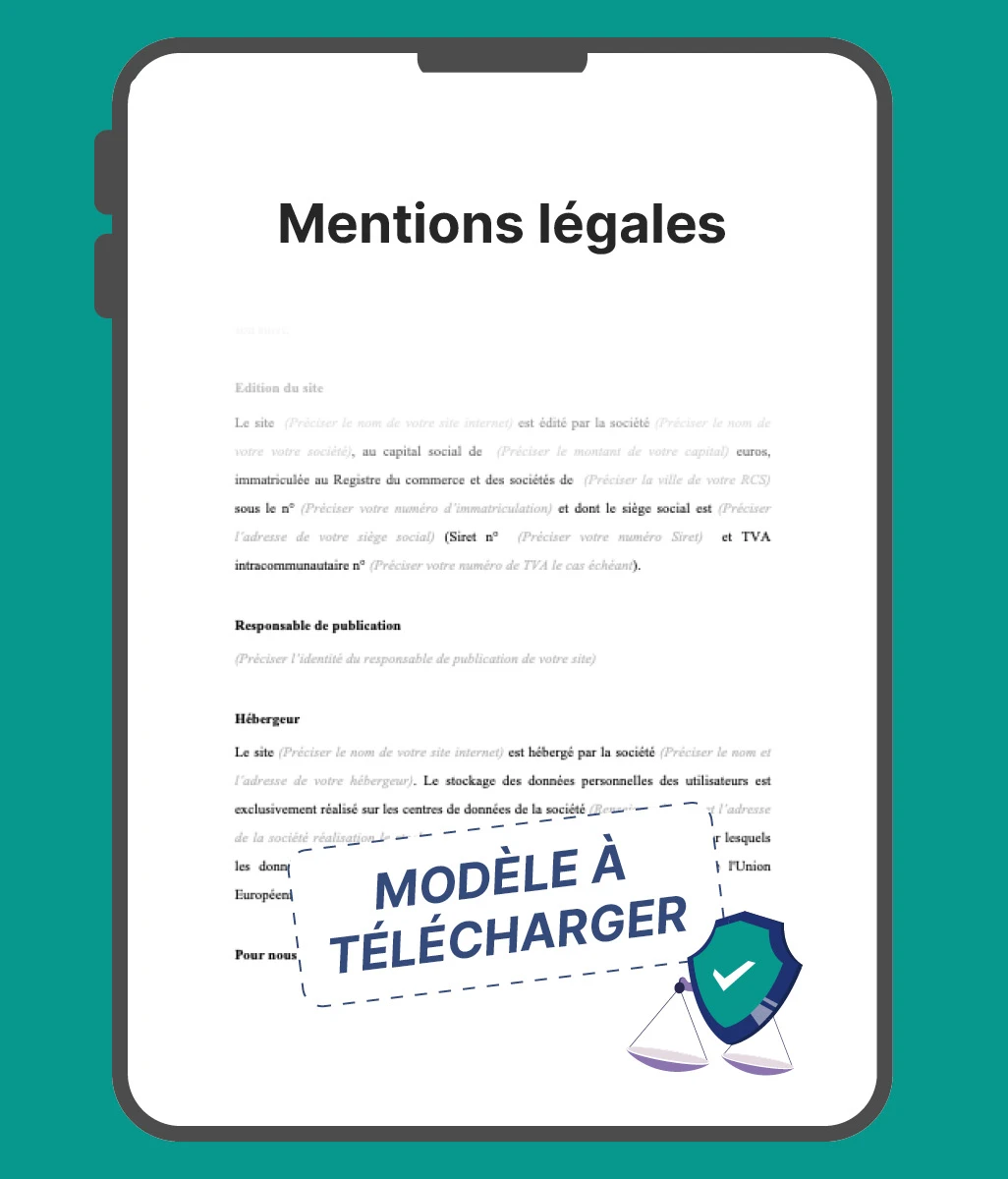
Legal notices allow for the clear identification of the person responsible for a website. They are mandatory for any online professional activity, including micro-entrepreneurs.
Without legal notices, you expose yourself to financial penalties. But more importantly, you lose the trust of your visitors. A transparent site more easily inspires purchases.
What information to include in your legal notices
To be compliant, certain information must appear on your store.
Your identity
You must indicate your full identity:
- First and last name (micro-enterprise)
- Or company name and legal status (company)
This information allows your customers to know who they are buying from.
Your contact details
You must provide clear contact details:
- Complete postal address
- Email address
- Phone number
These elements allow your customers to easily contact you.
Your official numbers
Depending on your status, you must mention:
- Your SIREN or SIRET number
- Your VAT number (if applicable)
This information confirms your legal existence.
The publication director
This is usually the manager or the person responsible for the store. Their name must be clearly mentioned.
The website host
You must indicate your host's information:
- Company name
- Address
- Phone number
The other mandatory legal pages
Legal notices alone are not sufficient. To be fully compliant, you must also add several legal pages.
General terms and conditions of sale (GTC)
The GTC govern the relationship between you and your customers. They specify:
- Payment methods
- Delivery times
- Refund conditions
They are essential for any e-commerce store.
Privacy policy
This page explains how you collect and use personal data. It is mandatory under the GDPR.
Return and refund policy
It clearly informs customers of their rights:
- Return deadlines
- Refund conditions
- Return procedure
Cookie management
You must display a cookie banner and provide a dedicated page explaining their use.
Where to display the legal notices on your store
Your legal notices must be accessible at all times, from any page of the site.
In the footer
The footer is the standard location. It must contain a visible link titled “Legal Notices”.
In your platform settings
On some e-commerce platforms, you can directly enter your legal policies in the settings.
This allows these pages to be automatically displayed on your site.
How to easily create your legal notices
Writing legal notices may seem complicated, but there are simple solutions.
Use ready-to-use templates
Some platforms offer free templates that you can complete with your information.
Use an online generator
There are tools that automatically generate a base of legal notices from your information.
Use AI to save time
You can ask an artificial intelligence to draft a base that you then customize.
However, be sure to verify the generated information.
Best practices to follow
For your legal notices to be effective and compliant, certain best practices are essential.
Regularly update your information
With each change (address, status, host), you must update your legal notices.
Stay transparent
Your information must be clear, readable, and complete. Transparency enhances trust.
Check accessibility
Your legal notices must be accessible at all times from all pages.
Comply with the GDPR
You must display:
- A privacy policy
- A compliant cookie banner
- User consent management
Common mistakes to avoid
Some mistakes are very common among e-merchants.
- Forgetting the website host
- Not displaying the notices in the footer
- Copying a template without personalizing it
- Forgetting the other legal pages
- Not updating the information
These mistakes can put you in violation.
In summary
Implementing your legal notices is an essential step for any online store.
Here are the steps to follow:
- Gather all your business information
- Add your host's information
- Create the GTC, privacy, and return pages
- Display all these pages in your footer
By following these steps, your store will be compliant, professional, and reassuring for your customers.
Conclusion
Legal notices are not just a formality. They are a pillar of your online business.
By implementing them correctly, you protect your business, comply with the law, and strengthen your customers' trust.
Take the time to draft them correctly from the launch of your store: it is an essential investment for selling calmly in the long term. And if you want to go further, remember to also check your GTC, your privacy policy, your returns, and your cookie banner, as everything must remain coherent, up to date, and easily accessible.
A solid legal foundation also helps you develop your business more calmly in the long term.